

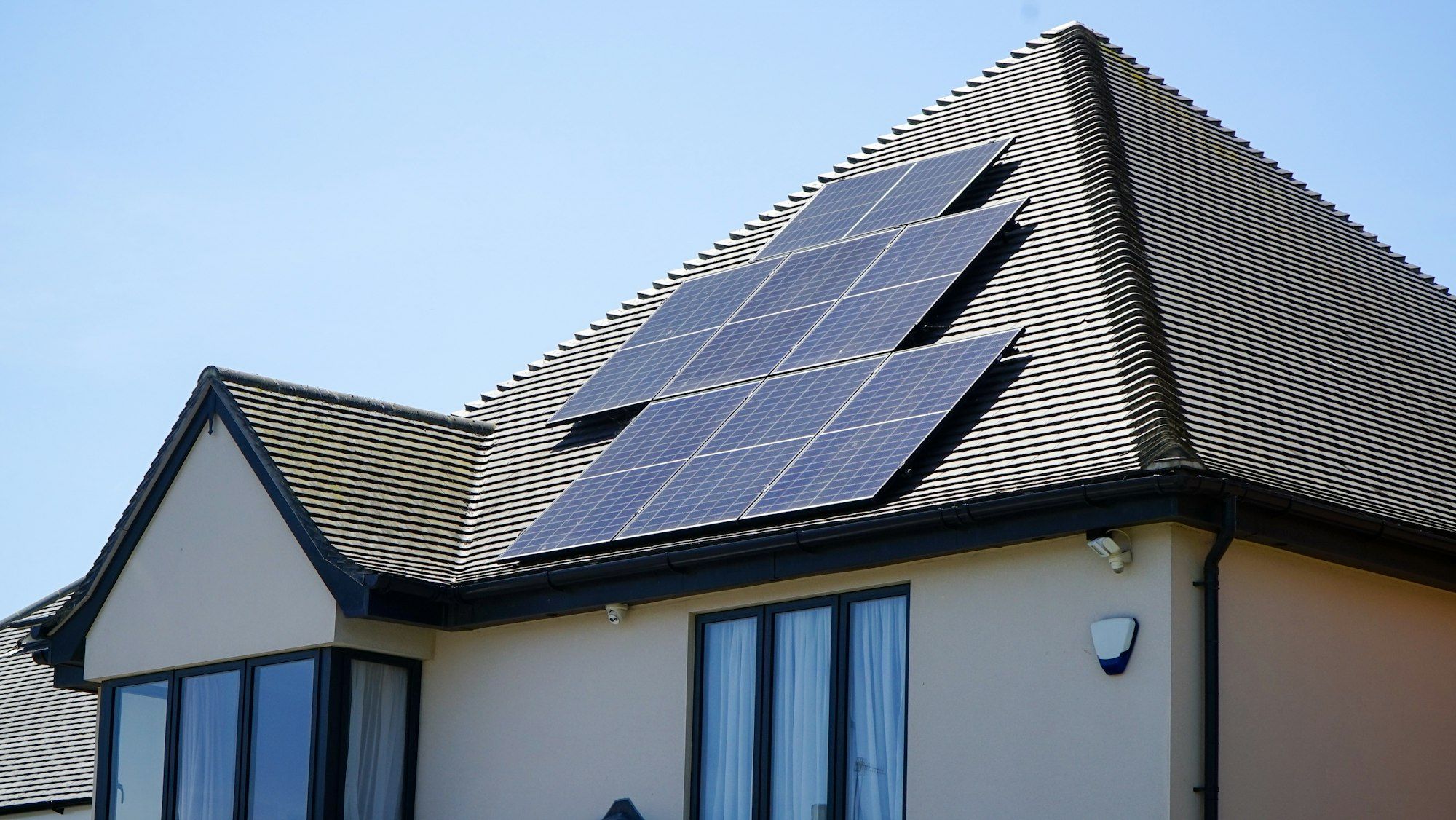
Why new builds are the best case for solar
The estates going up across Melbourne's growth corridors are close to ideal: large single-plane roofs, modern Colorbond with a straightforward pitch, no established tree shading, a modern switchboard, and increasingly three-phase supply.
Compared with retrofitting an older tiled roof in an established suburb, these jobs are faster, cleaner and support larger systems.
The builder's package
Volume builders almost all offer a solar package, and it is usually the smallest system that gets the house over its energy rating requirement. The equipment is generally chosen on price.
That is not automatically a bad deal — sometimes it is genuinely fine. But compare it properly: system size, panel and inverter brand, warranty terms, and who does the install and the warranty work. A 3 kW system on a four-bedroom house that will consume 25 kWh a day is not a solution, it is a compliance tick.
Cheap now, expensive later
These cost very little during construction and a great deal afterwards:
- Conduit from roof space to switchboard. Trivial while walls are open. Unpleasant afterwards.
- Switchboard with spare capacity. Physical room for a solar breaker, a battery isolator and later an EV charger circuit.
- Three-phase supply if your estate offers it.
- A sensible battery location. Shaded, ventilated, on an external or garage wall — not a west-facing garage wall that hits 45°C in February. Heat is what ages a battery.
- A conduit run to the garage for an EV charger, even if the car is years away.
Roof layout worth thinking about
Ask for the roof plan early. Things that matter: which planes face north, east and west; where the vents, aerials and air conditioning units will sit; and whether your estate's design guidelines restrict panels on street-facing planes.
Solar hardware placement is often decided by whoever installs the air conditioning first. Raising it early can save you a roof plane.
Timing
The practical sequence is: handover, connect power in your name, then install. We can have the design and the distributor pre-approval ready so installation happens shortly after you move in rather than months later.
Installing before handover complicates roof warranty and site access, and many builders will not permit it.
If you are not installing straight away
Do the cheap preparation anyway. Conduit, switchboard space and a battery location cost almost nothing during construction, and they turn a future install from a difficult retrofit into a straightforward one.