

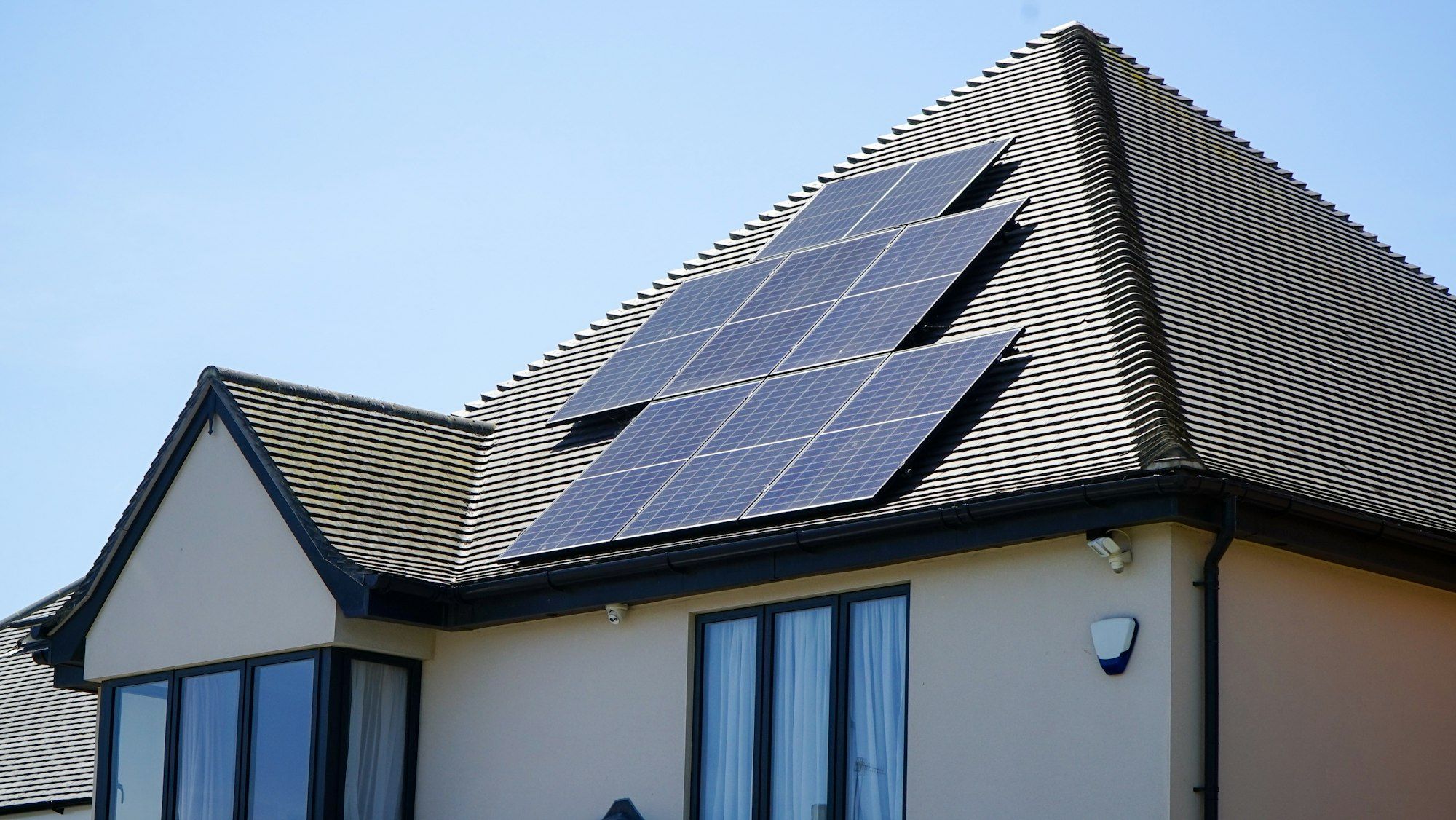
Sizing: why the standard 6.6 kW system exists
The 6.6 kW system is everywhere because of an accounting quirk, not because it suits your house. Distributors generally allow a 5 kW inverter on a single-phase connection, and panel capacity can be oversized against the inverter by up to a third — 6.6 kW of panels on a 5 kW inverter. It became the default package because it is the largest system that fits inside the simplest approval path.
That is a reasonable starting point for a household using around 20 kWh a day. It is undersized for a four-bedroom home in Wollert running ducted refrigerated cooling through February, and oversized for a couple who are out all day and export most of what they make at a feed-in rate that barely covers the meter.
We start from your actual quarterly usage, your roof orientation and pitch, whether you have three-phase supply, and whether a battery is coming later. The system size falls out of that.
What roof orientation actually costs you
North-facing is the textbook answer and produces the most over a year. But the highest annual total is not always the best outcome. West-facing panels produce later in the day, which lines up with the 3pm–8pm period when you are home, the air conditioning is running and grid power is most expensive. East-west splits flatten the production curve and often lift self-consumption even though the annual figure is lower.
With feed-in tariffs where they are, what you avoid buying is worth several times what you get paid for exporting. Designing for self-consumption rather than for peak annual output is usually the better financial call.
Single-phase and three-phase
Most established Melbourne housing is single-phase, which in practice caps you around a 5 kW inverter for straightforward approval. Many newer estates in Donnybrook, Wollert, Aintree and Tarneit are built with three-phase supply, which lifts that ceiling considerably and makes a 10 kW or larger system viable without a difficult approval.
It is worth checking before you assume a system size. We confirm it as part of quoting — it is visible at the switchboard and in your meter details.
Grid approval and paperwork
Every grid-connected system needs pre-approval from your distributor before install and export approval afterwards. In our service area that is Jemena, Powercor, AusNet or United Energy depending on your suburb, and each has different rules and timeframes. We lodge both applications for you.
What’s included
- Site assessment including shading, roof condition and switchboard check
- System design with an annual and seasonal generation estimate
- Tier 1 panels and inverter, make and model named in the quote
- Mounting and racking rated for your roof type and wind zone
- Distributor pre-approval and post-install export approval
- STC assignment — the federal rebate deducted from your price up front
- Compliance testing, commissioning and Certificate of Electrical Safety
- Monitoring set up on your phone before we leave
Common questions
How long does an installation take?
A straightforward residential system is a single day. Larger systems, difficult access, tile roofs needing re-bedding, or a switchboard upgrade can push it to two.
Will solar panels damage my roof?
Properly installed, no. On Colorbond we use purpose-made brackets and sealed penetrations. On tile we lift and replace tiles with roof hooks rather than drilling through them. Poor flashing is the usual cause of leaks, and it is avoidable.
Do I need to upgrade my switchboard?
Sometimes. Older boards without a main switch RCD, with ceramic fuses, or with no spare capacity usually need work to meet current standards. We check at the site assessment and tell you before install, not after.
What happens in a blackout?
A standard grid-connected system shuts down in an outage — that is a safety requirement so it cannot backfeed the network while crews are working. If you want power during an outage you need a battery with a backup circuit, which is a different design.